MemoHoney Official Website › How It Works
How It WorksHow Does MemoHoney Work? The pathway, and where it stops
Three of MemoHoney's four compounds act on the same pathway: nitric oxide, which relaxes blood vessels.
Citrulline becomes arginine, arginine becomes nitric oxide, and vessels widen. Niacin widens small vessels near the skin and causes the flush. Beta-alanine does something else entirely: it raises carnosine in muscle. None of that is a memory mechanism, and this page says where the chain actually ends.
A capsule that works on blood vessels is not the same thing as a capsule that works on recall, and the difference is the most useful thing on this page.
The pathway MemoHoney is built on
Nitric oxide is one of the smallest signalling molecules in the body and one of the best described. It is made from the amino acid arginine by an enzyme called nitric oxide synthase, it diffuses into the smooth muscle wrapped around a blood vessel, and it makes that muscle relax. A relaxed vessel is a wider vessel, and a wider vessel carries more blood at lower pressure.
The awkward part is getting arginine there. Swallowed arginine meets arginase in the gut wall and the liver, and much of an oral dose never reaches the circulation intact. Citrulline takes a different route: it escapes that first-pass metabolism, travels to the kidney, and is converted into arginine there. The trial that compared the two directly gave healthy volunteers escalating doses of each and found citrulline at three grams twice daily produced the highest trough plasma arginine and the best arginine to ADMA ratio. That result is why a modern formula contains both.
Citrulline is absorbed and converted
It bypasses the enzymes that dismantle oral arginine and is converted to arginine in the kidney. This is the efficient route and it is why citrulline appears twice on this label.
Arginine feeds nitric oxide synthase
The enzyme makes nitric oxide from arginine and oxygen. Supply matters most where supply is already limited, which is the conditional part of the literature.
Vessels relax, and flow improves
The endothelial meta-analysis found measurable improvement in flow-mediated dilation after short-term oral arginine, concentrated in people whose baseline dilation was poor. The citrulline meta-analysis found diastolic pressure fell at six grams a day or more.
And here the chain stops being about memory
No trial in this reference set followed the chain from a wider vessel to a better-remembered name. The one cerebrovascular trial measured flow in athletes at 8.8 grams a day. The link between cerebral blood flow and recall is real in disease and thin in healthy adults, and a capsule is not the tool that has tested it.
What beta-alanine is doing in MemoHoney
Beta-alanine has no part in the nitric oxide story. It combines with histidine to form carnosine, and carnosine sits inside muscle fibres buffering the hydrogen ions that accumulate during hard effort. That is why the sports-nutrition position stand describes it as an intracellular pH buffer and recommends four to six grams a day for at least four weeks, because carnosine loads slowly.
There is a brain-adjacent thread and it is worth stating precisely. Carnosine also occurs in the nervous system, and a 2024 meta-analysis of histidine-containing dipeptide supplementation reported an improvement in delayed recall. The NEAT trial supplemented carnosine itself, at two grams a day for up to twelve weeks, and found cognitive improvement among its younger participants. An imaging study in 60- to 80-year-olds used 2.4 grams of beta-alanine a day and reported changes in white-matter structure.
So the honest summary is that beta-alanine is in this formula for a reason that exists, at doses this formula cannot reach. It is the pattern of the whole product in one ingredient.
What niacin contributes to MemoHoney
Niacin is the only essential nutrient here, and it works in two registers at once. As a vitamin it is a precursor of NAD and NADP, the cofactors every cell uses to move electrons around, which is as close to a genuine energy mechanism as any supplement ingredient gets. As a pharmacological agent, at doses orders of magnitude higher, it lowers lipids and causes a dramatic flush.
Dietary niacin also carries the only cognition-adjacent observational signal in this formula. The Chicago Health and Aging Project followed older adults and found higher dietary niacin associated with a lower rate of incident Alzheimer’s disease and a slower rate of cognitive decline. CARDIA looked at intake through young adulthood against midlife cognition. Both are cohorts of what people ate, and people who eat more niacin-rich food differ from people who eat less in a hundred other ways.
A deficiency of niacin produces dementia as one of its three classic features, which is where the plausibility comes from. Correcting a deficiency and adding niacin to somebody who is not deficient are different interventions, and only the first has a clear rationale. The amount in this capsule is not printed, so neither the vitamin question nor the 35 mg upper intake question can be settled by reading the bottle.
The honest limits of the MemoHoney mechanism
Three things are true at once and they are easier to hold together than apart.
The mechanism is real. Nitric oxide biology is textbook physiology, citrulline genuinely raises arginine better than arginine does, and beta-alanine genuinely raises carnosine. None of that is speculative.
The doses are not in reach. Every figure in the paragraphs above is a gram figure, and a capsule is a gram of powder in total across six named inputs.
And the endpoint is the wrong one. The chain of evidence here ends at blood vessels and muscle buffering, not at recall. The NIH evidence digest on supplements and cognition puts the general version bluntly: direct evidence that dietary supplements prevent cognitive decline is lacking, and the strongest signals in the field belong to omega-3 intake rather than to anything on this label.
A product can have a sound mechanism, an honest ingredient list and no reasonable expectation of doing what its category promises. That is not fraud. It is what most of this shelf looks like when read carefully, and a buyer who understands it is making a better decision than one who has been told it works.
Sources behind the MemoHoney mechanism
- Schwedhelm E, Maas R, Freese R, et al. Pharmacokinetic and pharmacodynamic properties of oral L-citrulline and L-arginine: impact on nitric oxide metabolism. Br J Clin Pharmacol. 2008;65(1):51-9. Citrulline 3 g twice daily raised trough plasma arginine furthest. PMID 17662090. https://pubmed.ncbi.nlm.nih.gov/17662090/
- Bai Y, Sun L, Yang T, et al. Increase in fasting vascular endothelial function after short-term oral L-arginine is effective when baseline flow-mediated dilation is low: a meta-analysis of randomized controlled trials. Am J Clin Nutr. 2009;89(1):77-84. PMID 19056561. https://pubmed.ncbi.nlm.nih.gov/19056561/
- Barkhidarian B, Khorshidi M, Shab-Bidar S, et al. Effects of L-citrulline supplementation on blood pressure: A systematic review and meta-analysis. Avicenna J Phytomed. 2019;9(1):10-20. Doses ran 3 to 9 g/day, and only the arms at 6 g/day or more moved diastolic pressure. PMID 30788274. https://pubmed.ncbi.nlm.nih.gov/30788274/
- Li A, Li H, Chen J. The effects of L-citrulline supplementation on cerebrovascular function during sprint interval training in taekwondo athletes. J Exerc Sci Fit. 2025;23(3):222-228. Participants took 8.8 g of L-citrulline daily for five days. PMID 40474881. https://pubmed.ncbi.nlm.nih.gov/40474881/
- Le Roux-Mallouf T, Laurent J, Besset D, et al. Effects of acute nitric oxide precursor intake on peripheral and central fatigue during knee extensions in healthy men. Exp Physiol. 2019;104(7):1100-1114. Six grams of citrulline and six grams of arginine, each beside 520 mg of nitrate. PMID 31004378. https://pubmed.ncbi.nlm.nih.gov/31004378/
- Trexler ET, Smith-Ryan AE, Stout JR, et al. International society of sports nutrition position stand: Beta-Alanine. J Int Soc Sports Nutr. 2015;12:30. Four to six grams daily for at least four weeks, with paraesthesia the one reported side effect. PMID 26175657. https://pubmed.ncbi.nlm.nih.gov/26175657/
- Bell SM, Hariharan R, Laud PJ, et al. Histidine-containing dipeptide supplementation improves delayed recall: a systematic review and meta-analysis. Nutr Rev. 2024;82(10):1372-1385. PMID 38013229. https://pubmed.ncbi.nlm.nih.gov/38013229/
- O'Toole TE, Amraotkar AR, Gao H, et al. Carnosine supplementation improves cognitive outcomes in younger participants of the NEAT trial. Neurotherapeutics. 2025;22(2):e00541. Carnosine capsules at 2 g daily for up to 12 weeks. PMID 39919936. https://pubmed.ncbi.nlm.nih.gov/39919936/
- Ostfeld I, Zamir A, Ben-Zeev T, et al. beta-Alanine supplementation improves fractional anisotropy scores in the hippocampus and amygdala in 60-80-year-old men and women. Exp Gerontol. 2024;194:112513. Twenty participants at 2.4 g a day. PMID 38971131. https://pubmed.ncbi.nlm.nih.gov/38971131/
- Morris MC, Evans DA, Bienias JL, et al. Dietary niacin and the risk of incident Alzheimer's disease and of cognitive decline. J Neurol Neurosurg Psychiatry. 2004;75(8):1093-9. An observational study of niacin from FOOD, not from capsules. PMID 15258207. https://pubmed.ncbi.nlm.nih.gov/15258207/
- Qin B, Xun P, Jacobs DR Jr, et al. Intake of niacin, folate, vitamin B-6, and vitamin B-12 through young adulthood and cognitive function in midlife: the Coronary Artery Risk Development in Young Adults (CARDIA) study. Am J Clin Nutr. 2017;106(4):1032-1040. PMID 28768650. https://pubmed.ncbi.nlm.nih.gov/28768650/
- Institute of Medicine (US) Standing Committee on the Scientific Evaluation of Dietary Reference Intakes. Niacin. In: Dietary Reference Intakes for Thiamin, Riboflavin, Niacin, Vitamin B6, Folate, Vitamin B12, Pantothenic Acid, Biotin, and Choline. Washington (DC): National Academies Press; 1998. The adult tolerable upper intake level is 35 mg/day of nicotinic acid from supplements. NCBI Bookshelf NBK114304. https://www.ncbi.nlm.nih.gov/books/NBK114304/
- Dietary Supplements and Cognitive Function, Dementia, and Alzheimer's Disease: What the Science Says. National Center for Complementary and Integrative Health, National Institutes of Health. https://www.nccih.nih.gov/health/providers/digest/dietary-supplements-and-cognitive-function-dementia-and-alzheimers-disease-science
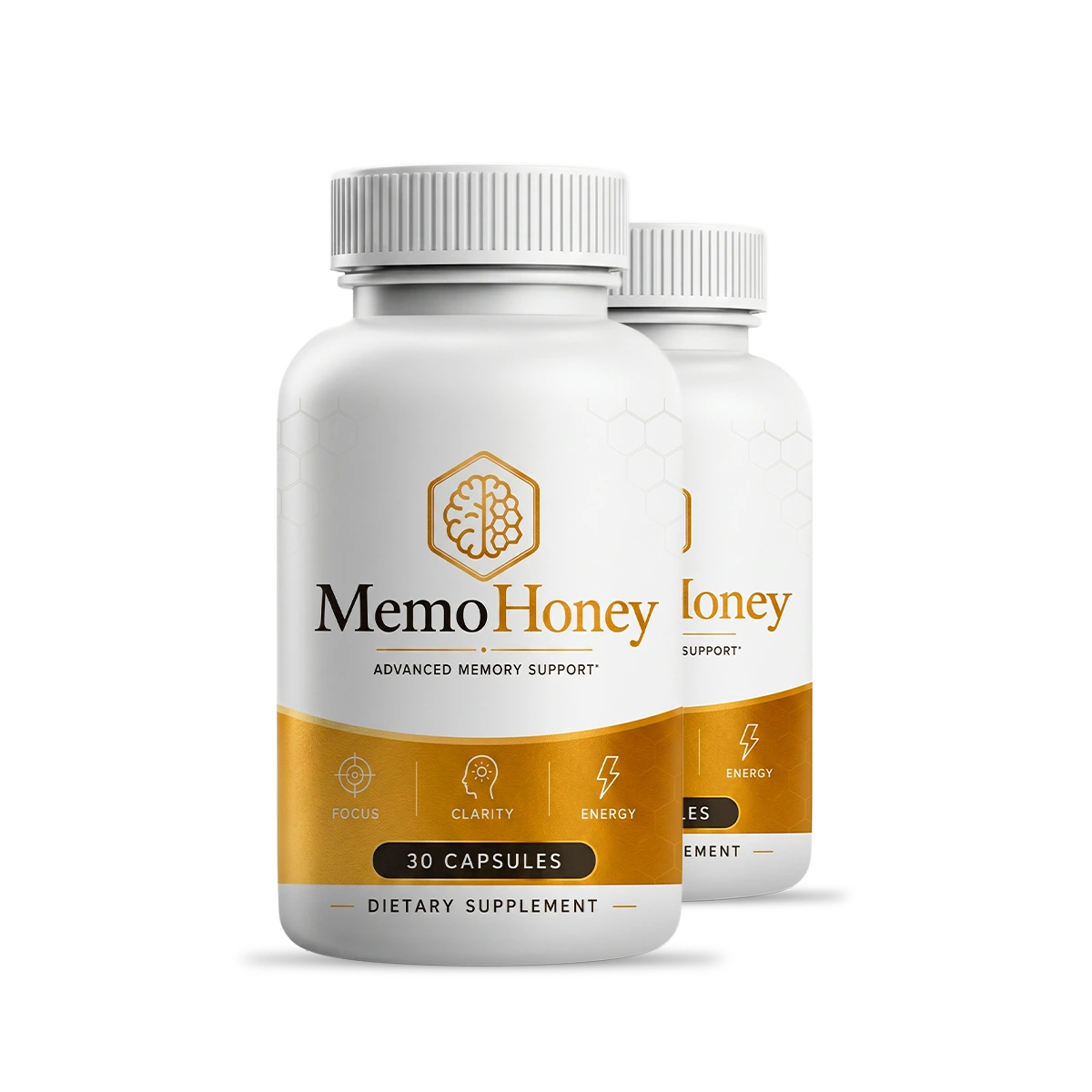
Order MemoHoney and judge it on a real timeline
One capsule a day for six weeks is the honest test. The 60-day window is long enough to run it and still change your mind.
From $158 for two bottles to $294 for six, with 60 days on all three
Choose A MemoHoney PackSwallowed whole, one a day, 30 to a bottle. Batch MEM-26/ME-8729, shipped from the United States.