MemoHoney Official Website › Choosing A Memory Supplement
Choosing A Memory SupplementChoosing a memory supplement: eight questions and a scoring sheet
Eight questions, two points each, sixteen available.
The sheet below is the one this desk uses. At the foot of the page it is applied to this desk’s own product, in public, including the four rows where that product scores nothing. A checklist the house product wins is a sales page in a different font.
Written by the MemoHoney editorial desk. It names no price and recommends no brand.
The eight questions
Does it print an amount for every ingredient?
Two points for a full Supplement Facts panel with a figure on every line. One for a panel with a proprietary blend that at least totals. Zero for no panel at all, which is more common than most buyers expect.
Does it name every ingredient?
Two points for a complete list. Naming is a lower bar than dosing and a product that fails it should not be on a shortlist.
Are the doses near the researched amounts?
Two points inside the studied range, one within a factor of three, zero below that or unknowable. Look the figure up in the trial rather than comparing two labels: six grams a day is the citrulline threshold whatever any competitor prints.
Is the evidence about the endpoint it is sold for?
Two points for randomised trials with a validated cognitive endpoint. One for a plausible mechanism with the wrong endpoint measured. Zero for neither.
Is the routine simple enough to keep?
Two points for once a day. One for twice. Zero for a regimen with conditions attached. Adherence is not a soft criterion; a supplement nobody takes has an effect size of zero regardless of its formula.
Is there a refund route somebody can use?
Two points for a published window covering opened bottles with a phone number on the site. One for a window with conditions. Zero for a returns policy that requires an unopened product, which is not a trial.
Is the marketing honest about what it is?
Two points for support language matched to the evidence. One for a bottle that is accurate while its sales page is not. Zero for disease claims.
Is there third-party testing anybody can read?
Two points for published certificates of analysis by lot. One for a named testing programme with no documents. Zero for a seal wall and nothing else.
Scoring the product this desk sells
Applied to MemoHoney, which is what this website exists to sell. The sheet is printed above so anybody can check the marking.
| Question | Score | Why |
|---|---|---|
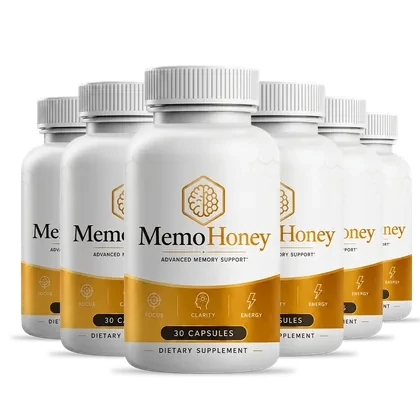
| Prints an amount for every ingredient | 0 of 2 | There is no Supplement Facts panel on the artwork. This is the row this product loses outright, and it is the most important row on the sheet. |
| Names every ingredient | 2 of 2 | All six are named on the vendor's own graphic and on the seller's page. A proprietary blend would have scored zero here. |
| Doses near the researched amount | 0 of 2 | Unknowable, and bounded by the capsule. Every research dose behind these four compounds is a gram figure. |
| Evidence about the endpoint it is sold for | 0 of 2 | The literature behind these compounds is vascular and muscular. One 38-person memory pilot at 6.4 g of arginine a day is the closest thing to an exception. |
| A clear, simple routine | 2 of 2 | One capsule, one time of day, thirty to a bottle. This is the product's strongest row and it is not a trivial one: adherence is what decides whether anything gets tested. |
| A usable refund route | 2 of 2 | Sixty days from purchase, opened bottles included, with a phone number printed on every page of the seller's website. |
| Honest marketing | 1 of 2 | The bottle claims support rather than treatment, which is correct. The sales page claims neurotransmitter optimisation, which nobody has measured. |
| Third-party testing published | 0 of 2 | No certificate of analysis is published for this product and this desk holds none. |
Total: 7 of 16.
Seven out of sixteen. The four zeros all come from one root cause, which is that the label prints no amounts, and the three highest scores are about the routine, the refund and the completeness of the ingredient names.
That is a defensible product with a specific weakness rather than a bad one, and a reader who cares most about auditability should buy something else while a reader who cares most about keeping a simple habit for sixty days has less to object to. Both of those are honest readings of the same seven points.
What the sheet deliberately leaves out
- Price. A cheap bottle that scores four is worse value than an expensive one that scores fourteen, and putting price on the sheet invites the opposite conclusion.
- Review scores. They measure how a product was marketed and who was asked, not what is in it.
- Badges. Made in the USA, GMP and FDA-registered are statements about a factory. A wall of them adds nothing to any row above.
- Whether a doctor formulated it, unless the doctor is named and checkable. Unnamed, it is worth zero and it appears on most bottles in this category.
- Brand familiarity. Marketing spend and formulation quality are unrelated variables.
The sheet is also deliberately short. Sixteen points across eight questions can be applied to a bottle in a shop in about two minutes, and a checklist nobody uses is worth as little as a supplement nobody takes. NCCIH and the NIH Office of Dietary Supplements both publish longer consumer guidance and both are worth the twenty minutes.
Sources for this checklist
- Barkhidarian B, Khorshidi M, Shab-Bidar S, et al. Effects of L-citrulline supplementation on blood pressure: A systematic review and meta-analysis. Avicenna J Phytomed. 2019;9(1):10-20. Doses ran 3 to 9 g/day, and only the arms at 6 g/day or more moved diastolic pressure. PMID 30788274. https://pubmed.ncbi.nlm.nih.gov/30788274/
- Trexler ET, Smith-Ryan AE, Stout JR, et al. International society of sports nutrition position stand: Beta-Alanine. J Int Soc Sports Nutr. 2015;12:30. Four to six grams daily for at least four weeks, with paraesthesia the one reported side effect. PMID 26175657. https://pubmed.ncbi.nlm.nih.gov/26175657/
- Teotia S, Rana AK, Gupta V. Comparison of the Safety and Efficacy of Oral L-arginine for the Treatment of Cognitive Impairment in Older Adults: A Prospective, Randomized, Placebo-Controlled Pilot Study. Cureus. 2026;18(7):e112987. Thirty-eight participants, oral L-arginine 6.4 g/day for 30 days. PMID 42621366. https://pubmed.ncbi.nlm.nih.gov/42621366/
- Baker LD, Manson JE, Rapp SR, et al. Effects of cocoa extract and a multivitamin on cognitive function: A randomized clinical trial. Alzheimers Dement. 2023;19(4):1308-1319. Cocoa extract at 500 mg/day of flavanols, and a commercial multivitamin, over three years. PMID 36102337. https://pubmed.ncbi.nlm.nih.gov/36102337/
- Dietary Supplements and Cognitive Function, Dementia, and Alzheimer's Disease: What the Science Says. National Center for Complementary and Integrative Health, National Institutes of Health. https://www.nccih.nih.gov/health/providers/digest/dietary-supplements-and-cognitive-function-dementia-and-alzheimers-disease-science
- Using Dietary Supplements Wisely. National Center for Complementary and Integrative Health, National Institutes of Health. https://www.nccih.nih.gov/health/using-dietary-supplements-wisely
- Dietary Supplements: What You Need to Know. Office of Dietary Supplements, National Institutes of Health. https://ods.od.nih.gov/factsheets/WYNTK-Consumer/
- Questions and Answers on Dietary Supplements. U.S. Food and Drug Administration. https://www.fda.gov/food/information-consumers-using-dietary-supplements/questions-and-answers-dietary-supplements