MemoHoney Official Website › Disclaimer
DisclaimerMemoHoney Disclaimer: claims, evidence and what is not established
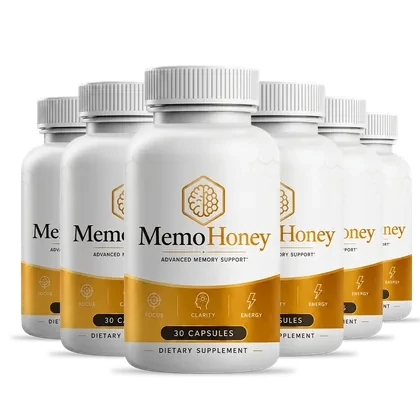
MemoHoney is a dietary supplement. It is not a drug, it is not FDA-approved, and it is not intended to diagnose, treat, cure or prevent any disease.
This page collects, in one place, every limit on what this website claims: what the label prints, what it does not, which sentences from the seller are reported rather than repeated, and what the review figures are.
The rest of the site states these limits where they matter. This page states them all together.
The FDA statement on every MemoHoney page
These statements have not been evaluated by the Food and Drug Administration. This product is not intended to diagnose, treat, cure or prevent any disease.
That sentence appears in the footer of every page on this website. It is there because the claims on the label are structure and function claims, and a structure and function claim carries the disclaimer with it.
There are no claim asterisks on this site. The disclaimer is linked to the claims by being on the same page rather than by a symbol that sends a reader hunting for small print.
What the MemoHoney label establishes and what it does not
| Established by the label | Not established by anything |
|---|---|
| Six ingredient names | How much of any of them is in a capsule |
| One capsule a day, 30 to a bottle | That the dose matches any published trial |
| The phrase advanced memory support | That memory improves, which no trial of this product has measured |
| Three marks reading focus, clarity and energy | A stimulant effect, since no stimulant is named |
| Made in a registered, GMP facility | A test of this capsule’s contents by anybody |
| Lot MEM-26/ME-8729 | A published certificate of analysis |
The left column is what arrives in the box. The right column is why this website prints research doses rather than product doses.
There is no Supplement Facts panel on the MemoHoney artwork. This website states that where it matters, estimates nothing, and prints the dose each published trial used so a reader has something real to compare against.
Claims this desk refuses to make about MemoHoney
| Refused | Why |
|---|---|
| optimizes neurotransmitter production | No trial of arginine, citrulline, niacin or beta-alanine has measured neurotransmitter production in a living human being. The seller's page says it; this website reports that it says it and never repeats it as a finding. |
| protects the brain from oxidative stress | None of the four compounds has a human antioxidant endpoint in brain tissue. Carnosine, which beta-alanine raises in muscle, has antioxidant chemistry in a test tube; that is not a protection claim for a person. |
| a printed amount for any ingredient | There is no Supplement Facts panel on the label, on the vendor's ingredient graphic or on the seller's page. Nothing on this site estimates one. |
| a comparison with any prescription medicine | MemoHoney is a dietary supplement. Setting it beside a drug approved for cognition would imply a shared evidence base that does not exist. |
A refusal is an evidence decision, so it is recorded alongside the evidence.
About the MemoHoney figures on this website
- Review scores, written-review counts and order counts are the distributor’s own summary figures. They are not verified transcripts and they are not evidence about the product.
- Lot MEM-26/ME-8729 and certificate reference MEM-8729-26-ME are filing references. Neither is laboratory proof and no analysis is published for this product.
- Prices were read from the seller’s page on 19 September 2026. The checkout is the authority on the current price, and struck figures are the seller’s own comparison prices.
- The four-to-eight week wait described across this site comes from buyer reviews on this desk, not from a trial of this product.
- Every research dose printed here is the dose that trial used, read from the published record. None of it is a statement about the capsule.
Medical limits on the MemoHoney pages
Nothing here is medical advice. This desk sells a dietary supplement and writes about it; it does not know your medical history and would be wrong to guess at it.
Three practical points stand out for this particular formula. Three of its four compounds widen blood vessels, so anybody on a blood-pressure medicine, a nitrate or a drug for erectile dysfunction has a genuine reason to mention it to their prescriber. Niacin has a 35 mg adult upper intake and this label prints no figure. And memory change that is new, fast or frightening is a reason to be assessed rather than a reason to start a capsule.
MedlinePlus sets out what ordinary forgetfulness looks like. The NIH evidence digest on supplements and cognition sets out how little any supplement has been shown to do for it.
Precautions in full, as they appear on this website:
- A dietary supplement, not a drug. A capsule — not a gummy and not liquid drops.
- Not intended to diagnose, treat, cure or prevent any disease, and not FDA-approved.
- For healthy adults aged 18 and over. Not for anyone under 18.
- The artwork names six ingredients and carries no Supplement Facts panel, so no milligram figure on this website is attributed to the capsule.
- Four of the six names are vasodilators. Anyone taking a blood-pressure medicine, a nitrate, or a drug for erectile dysfunction should raise this capsule with the prescriber before starting it, because those act on the same pathway.
- Do not take more than the label states unless a clinician tells you to.
- Individual results vary. Sleep, hearing, eyesight, medication and how busy a week is all move the same day-to-day recall this formula is sold for.
- Review scores and order counts on this website are the distributor’s own summary figures, not verified transcripts and not evidence.
- Lot MEM-26/ME-8729 and certificate reference MEM-8729-26-ME are filing references, not laboratory proof.
- The website email cannot see orders. For a refund, call the order desk.
- The money-back guarantee is a purchase policy, not a medical promise.
Sources behind the MemoHoney disclaimer
- Institute of Medicine (US) Standing Committee on the Scientific Evaluation of Dietary Reference Intakes. Niacin. In: Dietary Reference Intakes for Thiamin, Riboflavin, Niacin, Vitamin B6, Folate, Vitamin B12, Pantothenic Acid, Biotin, and Choline. Washington (DC): National Academies Press; 1998. The adult tolerable upper intake level is 35 mg/day of nicotinic acid from supplements. NCBI Bookshelf NBK114304. https://www.ncbi.nlm.nih.gov/books/NBK114304/
- MedlinePlus. Memory. Bethesda (MD): U.S. National Library of Medicine, National Institutes of Health. https://medlineplus.gov/memory.html
- Dietary Supplements and Cognitive Function, Dementia, and Alzheimer's Disease: What the Science Says. National Center for Complementary and Integrative Health, National Institutes of Health. https://www.nccih.nih.gov/health/providers/digest/dietary-supplements-and-cognitive-function-dementia-and-alzheimers-disease-science
- Questions and Answers on Dietary Supplements. U.S. Food and Drug Administration. https://www.fda.gov/food/information-consumers-using-dietary-supplements/questions-and-answers-dietary-supplements
- Dietary Supplements: What You Need to Know. Office of Dietary Supplements, National Institutes of Health. https://ods.od.nih.gov/factsheets/WYNTK-Consumer/