MemoHoney Official Website › Blog › Pack duration and terms
Why a 60-Day Window and a Six-Month Pack Ask Different Questions
A 30-capsule bottle describes a month of the stated routine. A 60-day money-back term and a six-month pack describe different commitments, not predicted results.
A bottle, a window and a larger pack are three different clocks
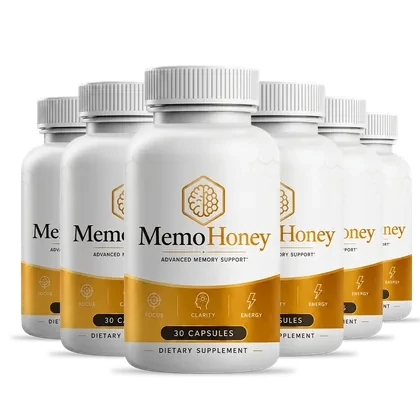
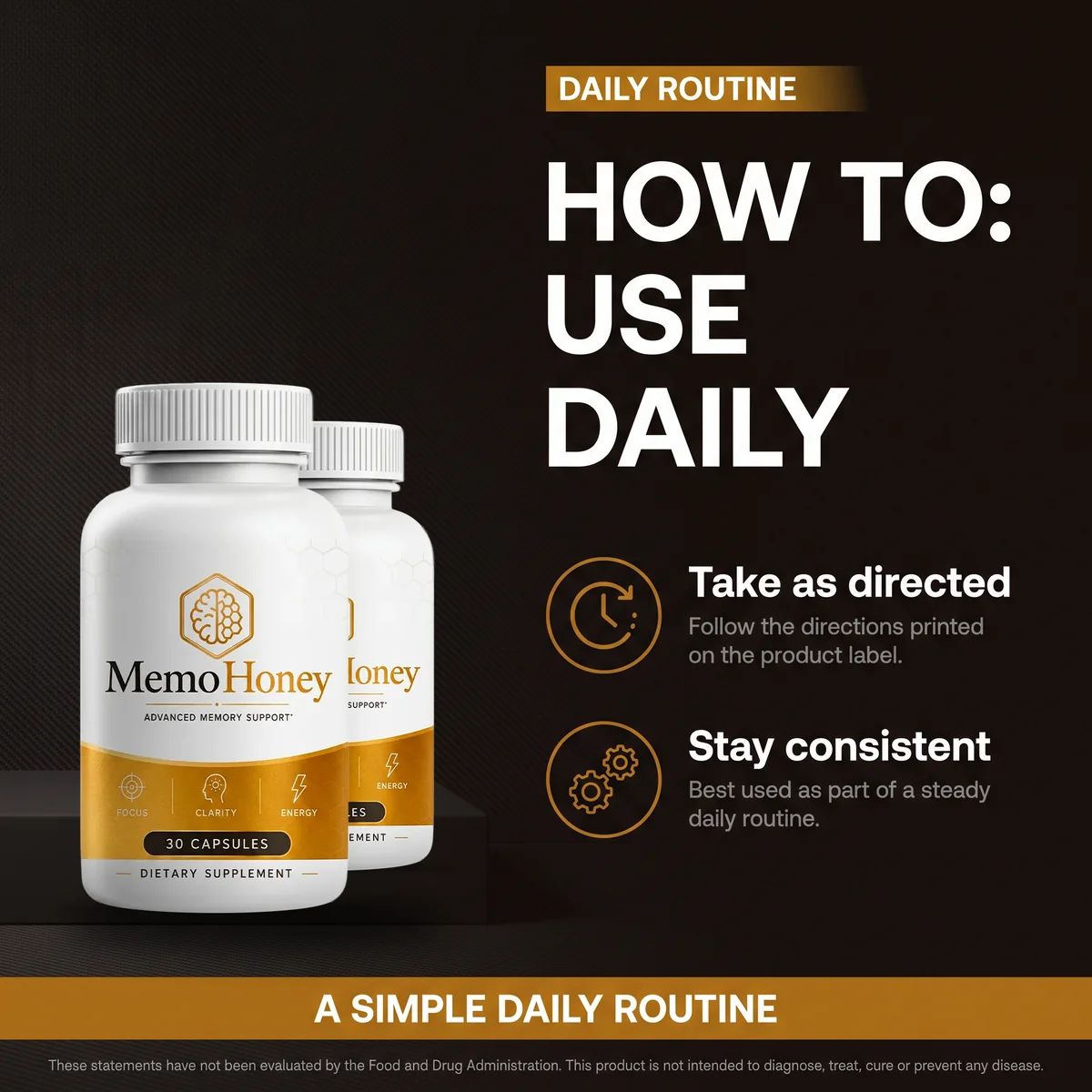
MemoHoney's product information describes one capsule daily and 30 capsules in a bottle. That is a thirty-day routine. Its stated money-back guarantee is 60 days from the date of purchase, and the seller asks for 30 days of use before considering a claim. A three-bottle pack is 90 days at the printed routine, and a six-bottle pack is 180 days. These are calendar facts before they are sales facts.
The entry pack contains two bottles, so it covers 60 days when followed as directed. That makes the amount of product and the stated window the same length. The larger packs lower the stated per-bottle price, but their third through sixth months occur after the window has ended. A buyer does not need to call this good or bad; they need to see the timing before paying for it.
Nothing in that arithmetic predicts a memory result. It does not say a buyer should wait sixty days, and it does not say a capsule will produce a change by any date. It simply identifies the terms and product durations that the seller has made available, so that a buyer can decide how much time and money they are comfortable committing.
| Item | What the supplied term says | What it cannot promise |
|---|---|---|
| One bottle | 30 capsules at one daily | A research-equivalent dose |
| Two bottles | 60 capsules / 60 days at the stated routine | A personal result |
| Guarantee | 60 days from purchase | A delivery-date or clinical clock |
| Six bottles | 180 days at the stated routine | Six months inside the stated window |
Pack duration and the service window can be compared directly; neither tells a buyer what outcome to expect.
The return clock begins before a delivery day
A guarantee measured from purchase begins before delivery and before the first morning capsule. The order confirmation is therefore a practical part of the product record. Save it on the day of payment, mark the stated end date, and retain any current service instruction if a return question later arises. A buyer should not have to reconstruct these basic facts from memory.
The seller's 30-day use condition is a service term, not a promise of an effect after a month. It explains how the seller says it will handle a request. It does not make it appropriate to postpone attention to a reaction, a medication question, or a memory change that needs medical assessment.
Keeping purchase, delivery, use and return dates separate avoids ordinary misunderstandings. A carrier delay is not a change in the product. A tracked return arrival is not the same event as a card credit. The terms may describe several dates, but a buyer can preserve each one without pretending that all of them mean the same thing.
Price per bottle is not the whole decision
The seller displays lower per-bottle figures on the larger packs. That comparison can be useful, but it leaves out the number of bottles that extend beyond the stated window. A price label such as best value answers a cost question. It does not answer whether a first-time buyer wants to pay in advance for months that cannot be returned under the published calendar.
The product may be evaluated differently by someone reordering than by someone encountering it for the first time. That is why a pack ladder is not a universal recommendation. The smallest rung gives the clearest comparison between the daily direction, 60 capsules and the stated 60-day period. Larger rungs add time, shipping terms and seller-described digital materials to that initial decision.
The pricing page and guarantee page belong beside each other. Reading only the price can hide the duration. Reading only the guarantee can hide the amount of product already paid for. Their relationship is a concrete part of the purchase, even though it says nothing about whether the formula will meet an individual's hopes.
The calendar does not supply a missing ingredient amount
The label names six ingredients and prints no amount for any of them. A bottle count tells the buyer how many days the stated routine can run; it cannot show whether a capsule contains the amount an individual study used. The research on the named ingredients spans gram-scale sports or blood-flow studies, an observational niacin cohort and a small imaging result, not a trial of this product's mixture.
That is why a guarantee calculation should not become a dosage calculation. Two bottles are sixty capsules, but that does not reveal six ingredient amounts. The supplied artwork also does not provide a Supplement Facts panel, a release assay, or a clinical trial of MemoHoney. Those gaps remain gaps even when the pack duration is easy to calculate.
A buyer can still use the label honestly. It identifies the ingredient names, the product's Advanced Memory Support wording and the daily direction. The ingredients page keeps those statements separate from the published studies on individual substances, so a reader can see what the record does and does not allow them to compare.
| Date or record | Why a buyer should keep it |
|---|---|
| Purchase confirmation | It starts the stated 60-day window |
| Order ID | It identifies a specific service request |
| Current return instruction | It confirms how a particular order should be handled |
| Tracking receipt | It records a parcel's movement, not refund approval |
Service dates should be read separately from health or product-performance questions.
A review summary is not a guarantee timeline
The seller's review material reports a summary of customer feedback. A review score or a reported wait may help a buyer understand how the seller presents its own audience. It is not a controlled study, a personal forecast, or a rule that an individual must continue taking a product until a certain date. Reviews are accounts and summaries, not a clinical clock.
This is particularly important when the review language is placed beside a return term. A consumer may feel pressure to continue simply because a summary reports that others waited. The appropriate response is not to make the score disappear; it is to keep the score separate from medical judgement, the service terms and the missing information about the formula's actual ingredient amounts.
If a buyer decides that a return is appropriate, the useful records are the purchase date, order ID, current instruction and tracking information. If a buyer has a health concern, the useful record is the full label taken to a pharmacist or clinician. A seller's review summary is not the right source for either of those questions.

A daily routine should stay in its lane
One capsule in the morning may be an easy routine to remember. That is a practical feature, not evidence that the routine treats memory loss, improves a diagnosed condition or substitutes for sleep, medication review, hearing care or an assessment of a new decline. A supplement page should not turn the convenience of a habit into a clinical conclusion.
The ingredient list also matters when someone uses prescription medicines or manages a condition. A buyer taking nitrates, blood-pressure medicines, blood thinners or PDE5 inhibitors should show the actual label to a pharmacist or prescriber. The pack duration and guarantee are not the information that decides whether a formula is appropriate for that person.
The useful scope of the calendar is simple: compare pack duration, purchase timing and stated terms before buying. Preserve the transaction record after buying. Keep health questions with health professionals. That division makes the website easier to use without asking a commercial timeline to answer a medical question.
Read the MemoHoney product record before ordering
The label, pack duration, listed return terms, and the questions the supplied record does not settle.
From $158 for two bottles to $294 for six, with 60 days on all three
Choose A MemoHoney PackSwallowed whole, one a day, 30 to a bottle. Batch MEM-26/ME-8729, shipped from the United States.
What this record can support
A product label, seller page, review summary, order confirmation, lot reference and research paper are different records. Each can be useful inside its own boundary. A label identifies its printed claims. A seller page can describe a current commercial term. A review summary reports how a seller has presented its own feedback. A study reports the population, dose and outcome that study actually examined. None should silently become another kind of evidence.
That keeps a negative decision available. If the missing detail would decide the purchase, a buyer can leave the product unpurchased rather than inventing a reassuring answer. This is not a conclusion that the product is good or bad. It is an acknowledgement that the supplied information does not settle the particular question the buyer needed resolved before a guarantee clock began.
After a purchase, the same sorting keeps issues in the right hands. Save product and order records for a service question. Take medicine interactions, reactions, worsening memory or a change noticed by others to a pharmacist or clinician. A retail process can trace a payment or shipment, but it cannot assess an individual's health or replace appropriate care.
The practical method is modest: read the literal statement, save the source carrying it, ask the next precise question, and do not make a mark, a score or a date prove more than it can. That is a more durable way to use a supplement website than allowing a polished presentation to fill every blank with an assumption.
- Treat a pack count and a return term as calendar information, not an outcome promise.
- Treat a review score as the seller's summary, not a clinical result or a personal prediction.
- Treat an order or lot reference as a traceability tool, not a laboratory report.
- Ask for missing label, testing or dietary details before the purchase date starts the stated window.
- Bring medicine, reaction and memory concerns to a pharmacist or clinician.
MemoHoney is a dietary supplement, not a treatment for anything. Memory that has changed suddenly, quickly, or in a way people close to you have noticed is a reason to make an appointment rather than to start a capsule. MedlinePlus sets out plainly what ordinary forgetfulness looks like and what does not belong in that category.
References
- Questions and Answers on Dietary Supplements. U.S. Food and Drug Administration. https://www.fda.gov/food/information-consumers-using-dietary-supplements/questions-and-answers-dietary-supplements
- Using Dietary Supplements Wisely. National Center for Complementary and Integrative Health, National Institutes of Health. https://www.nccih.nih.gov/health/using-dietary-supplements-wisely
- MedlinePlus. Memory. Bethesda (MD): U.S. National Library of Medicine, National Institutes of Health. https://medlineplus.gov/memory.html
- Dolan E, Swinton PA, Painelli VS, et al. A Systematic Risk Assessment and Meta-Analysis on the Use of Oral beta-Alanine Supplementation. Adv Nutr. 2019;10(3):452-463. PMID 30980076. https://pubmed.ncbi.nlm.nih.gov/30980076/
- Teotia S, Rana AK, Gupta V. Comparison of the Safety and Efficacy of Oral L-arginine for the Treatment of Cognitive Impairment in Older Adults: A Prospective, Randomized, Placebo-Controlled Pilot Study. Cureus. 2026;18(7):e112987. Thirty-eight participants, oral L-arginine 6.4 g/day for 30 days. PMID 42621366. https://pubmed.ncbi.nlm.nih.gov/42621366/