MemoHoney Official Website › Blog › Sleep Does More Than The Capsule
Sleep Does More For Recall Than Anything On This Shelf
This is the article that costs the product beside it the most, and it is the reason the other four are worth reading. If you are going to change one thing about your memory this month, the evidence says it should not be a capsule, and a desk that sells capsules should say so out loud.
Why this article exists on a website that sells a supplement
The straightforward reason is that it is true, and a website that only publishes what helps it sell is an advertisement with subheadings.
The less obvious reason is that it makes everything else on this site easier to weigh. A reader who has seen this desk argue against its own product on the point that matters most has a basis for believing the pages where it argues for it. That is the entire value proposition of publishing a refusal list, a scoring sheet the house product loses, and an article like this one.
The third reason is practical. Somebody worried enough about their recall to be reading supplement pages at eleven at night is a person for whom the five things below are worth more than any bottle, and they will not be told so anywhere else on this shelf.
What sleep actually does to a memory
Memory formation has three stages and sleep is load-bearing in two of them.
Encoding happens while awake and depends on attention. A name you never attended to was never encoded, and no amount of later effort will retrieve something that was not stored. Sleep deprivation degrades attention directly, which means a badly slept day produces memories that were never properly made in the first place.
Consolidation happens overnight. During slow-wave sleep the hippocampus replays the day's experience to the cortex, and that replay is how a fragile new trace becomes a durable one. A night of short or fragmented sleep interrupts the process, and the material studied the previous day is measurably less well retained.
Retrieval happens while awake and is heavily affected by fatigue, stress and interference. This is the stage most people describe when they say their memory is going: the name is there, it simply will not come.
- Two of the three stages of remembering depend on sleep.
- A week of six-hour nights degrades recall more than most people attribute to age.
- The effect is immediate and it is reversible, which is not true of much in this field.
- It costs nothing, which is exactly why nobody sells it to you.
The other four free levers
Sleep is first. Four more are worth more than any capsule in this category, and every one of them is free or nearly so.
Hearing
A name that was never heard clearly was never encoded, and this is the single most under-recognised cause of apparent memory trouble in people over fifty. Hearing loss arrives gradually enough that nobody notices the moment conversation became effortful. A hearing test is quick, usually free, and it settles the question.
Eyesight
The same argument in a different sense. Reading that has become effortful is reading that gets less attention, and attention is the input to encoding. An eye test is on the same list as a hearing test for the same reason.
A medication review
Several very common prescriptions affect recall, including some sedatives, some antihistamines and some bladder medicines. A pharmacist can review a list in ten minutes and will tell you honestly whether anything on it is a candidate. This is free and almost nobody does it.
Alcohol, and its timing
An evening drink suppresses the slow-wave sleep in which consolidation happens, which is why a night out is followed by a day of poor recall that has nothing to do with the hangover. Moving drinks earlier, or having fewer of them, changes overnight consolidation in a way that is noticeable within a fortnight.
| Lever | Cost | How long before it shows | Evidence strength |
|---|---|---|---|
| Sleep, consistently | Nothing | About a fortnight | Strong and mechanistic |
| A hearing test | Usually free | Immediately, if it finds something | Strong |
| An eye test | Low | Immediately, if it finds something | Strong |
| A medication review | Free | Weeks, if something changes | Strong for specific drugs |
| Moving alcohol earlier | Nothing | A fortnight | Good |
| A memory supplement | $49 to $79 a bottle | Four to eight weeks, per buyers | Weak across the whole category |
The bottom row is the one this website sells. It is printed last on purpose.
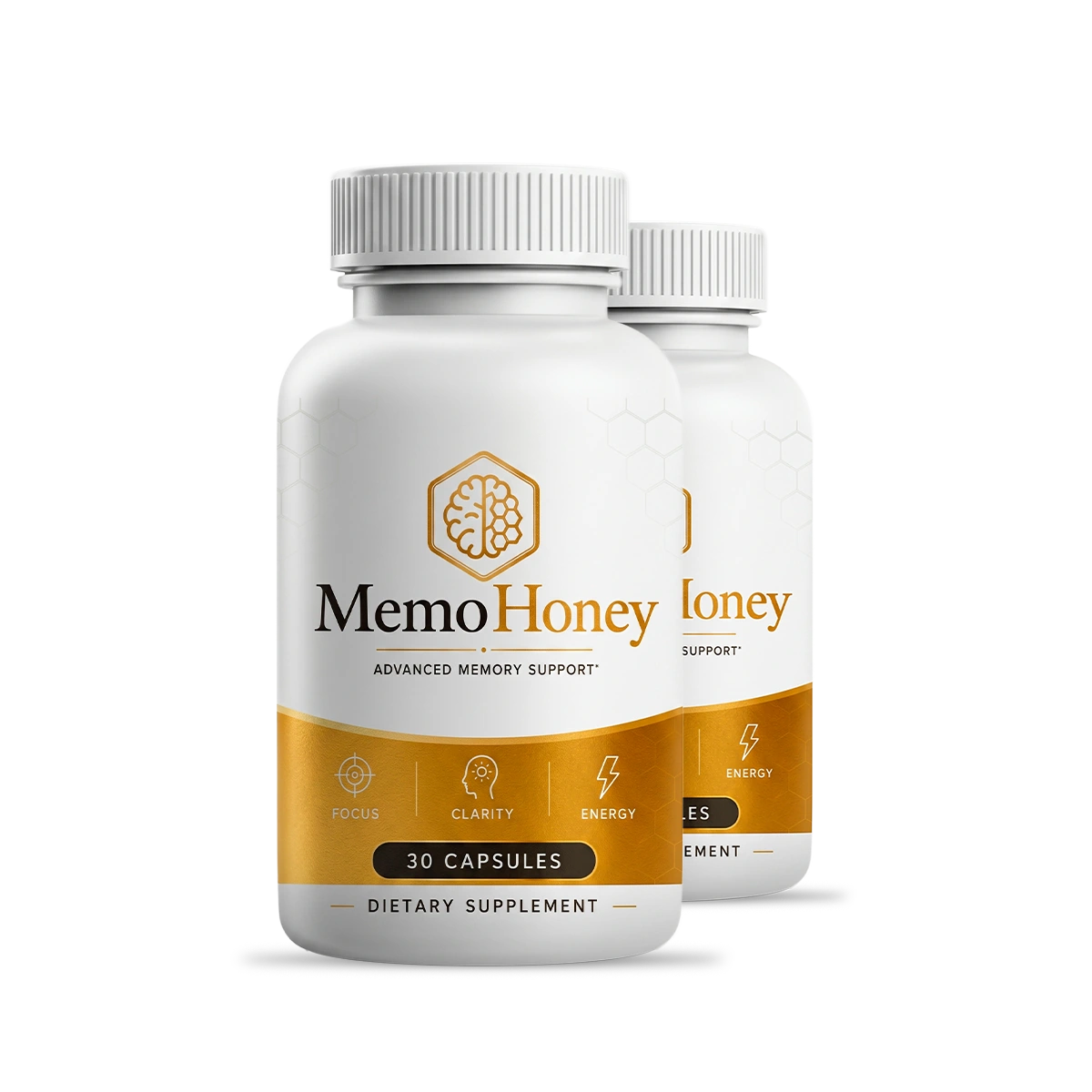
If you want the capsule as well, this is the MemoHoney routine
One capsule a day for six weeks, alongside the five things above rather than instead of them. That is the only version of this product worth judging.
From $158 for two bottles to $294 for six, with 60 days on all three
Choose A MemoHoney PackSwallowed whole, one a day, 30 to a bottle. Batch MEM-26/ME-8729, shipped from the United States.
What supplements have actually been shown to do for cognition
The honest summary is short, and it comes from the two largest trials in the field.
COSMOS-Mind randomised older adults to cocoa extract containing 500 mg of flavanols a day, to a commercial multivitamin and mineral, or to placebo, and followed them for three years with annual cognitive testing. The multivitamin produced a small benefit on the primary composite. The cocoa extract produced none at all. The clinic sub-cohort and meta-analysis pooled three cognitive studies inside the same programme and found the same modest multivitamin signal.
The NIH evidence digest on supplements and cognition reviews the wider field, and its conclusions are worth stating in full rather than paraphrased into something friendlier: direct evidence that dietary supplements prevent cognitive decline or dementia is lacking; three large trials of ginkgo did not reduce dementia risk; short-term supplementation with B6, B12 and folic acid has not improved cognition in older adults; and the most consistent positive findings in the whole area are for omega-3 intake, measured as how much fish people eat.
- A three-year randomised trial of thousands of people is what it takes to detect a small cognitive effect.
- The one supplement that produced a signal in that trial was an ordinary multivitamin.
- Nothing in the nitric-oxide family has been tested at that scale for cognition.
- The closest published result for any ingredient on this label is a thirty-eight-person pilot at 6.4 g of arginine a day.
How to run the month properly
If you are going to change something this month, the order below gets the most out of the least effort, and it costs almost nothing until the last line.
- Week one: fix the bedtime, not the wake time. Most people have a fixed alarm and a drifting bedtime. Move the bedtime earlier by twenty minutes and hold it for seven nights before judging anything.
- Week one: book the hearing test. It takes fifteen minutes and the waiting list is usually the longest part, so book it before you need it.
- Week two: take the medicine list to a pharmacist. Everything, including anything bought over the counter. Ask directly whether any of it is known to affect recall.
- Week two: move the last drink two hours earlier. Not fewer drinks necessarily, at least to begin with. Earlier is the change that shows up fastest in overnight consolidation.
- Week three: write down the three specific things you want to change. Names at a gathering. Why you walked into a room. Reading a long email once. Specific, checkable, written down.
- Week four onward: add the capsule, if you want one. Last, on top of the rest, so that whatever happens next is happening to somebody who has already fixed the free things.
Running it in that order has one large advantage beyond the obvious. If your recall improves in weeks one to three, you have learned something true about your own life that no bottle could have told you, and you have saved the price of six months of capsules. If it does not, you have removed the four commonest explanations, and whatever you try next is being tested against a much cleaner baseline.
Where a capsule still fits
Having said all of that, there is a version of this product that makes sense, and it is worth describing because the alternative reading of this article is that nobody should buy anything, which is not what the evidence says either.
A daily capsule taken before breakfast is a habit. Habits are load-bearing: they anchor a morning, they prompt the glass of water that comes with them, and for a lot of people they are the thread that a sleep log or a crossword habit gets attached to. There is nothing foolish about paying for a routine, provided you know that is what you are paying for.
What is foolish is taking a capsule instead of the five things above. A person sleeping six hours a night, avoiding a hearing test and taking a supplement for their memory has bought the least effective item on the list and skipped the rest. MedlinePlus is the free, plain place to read what ordinary forgetfulness looks like and what does not belong in that category, and reading it costs nothing at all.
Sleep, hearing, eyesight, a medication review and the timing of alcohol beat every capsule in this category, and four of the five are free. A supplement is a routine to add on top, not a substitute for any of them.
MemoHoney is a dietary supplement, not a treatment for anything. Memory that has changed suddenly, quickly, or in a way people close to you have noticed is a reason to make an appointment rather than to start a capsule. MedlinePlus sets out plainly what ordinary forgetfulness looks like and what does not belong in that category.
References
- Baker LD and colleagues, Alzheimers Dement 2023;19(4):1308-1319 — Effects of cocoa extract and a multivitamin on cognitive function: A randomized clinical trial; what it tested: cocoa extract at 500 mg/day of flavanols, and a commercial multivitamin, over three years (PubMed 36102337)
- Vyas CM and colleagues, Am J Clin Nutr 2024;119(3):692-701 — Effect of multivitamin-mineral supplementation versus placebo on cognitive function: results from the clinic subcohort of the COcoa Supplement and Multivitamin Outcomes Study (COSMOS) randomized clinical trial and meta-analysis of 3 cognitive studies within COSMOS (PubMed 38244989)
- National Center for Complementary and Integrative Health, National Institutes of Health — Dietary Supplements and Cognitive Function, Dementia, and Alzheimer's Disease: What the Science Says, the agency’s own web page (www.nccih.nih.gov)
- MedlinePlus (U.S. National Library of Medicine, National Institutes of Health) — Memory, the plain-language health topic page (medlineplus.gov)
- Teotia S, Rana AK, Gupta V, Cureus 2026;18(7):e112987 — Comparison of the Safety and Efficacy of Oral L-arginine for the Treatment of Cognitive Impairment in Older Adults: A Prospective, Randomized, Placebo-Controlled Pilot Study; what it tested: thirty-eight participants, oral L-arginine 6.4 g/day for 30 days (PubMed 42621366)