MemoHoney Official Website › Blog › Niacin Has A Ceiling
Niacin Is The One Ingredient With A Ceiling, And No Printed Number
Of the four compounds in this formula, three have no established upper limit and one does. Niacin is an essential nutrient with a defined requirement, a defined tolerable upper intake, and a side effect most people can feel within half an hour. It is also the ingredient whose missing figure matters most.
What niacin is, and why it is in a brain formula
Niacin is vitamin B3. The body uses it to make NAD and NADP, two cofactors that appear in an enormous number of metabolic reactions, including the ones that turn food into usable energy inside every cell. That is as close to a literal energy mechanism as any supplement ingredient gets, and it explains why an energy mark appears on the label band beside focus and clarity.
There is a second, older reason it belongs in a conversation about the brain. Severe niacin deficiency causes pellagra, whose three classic features are dermatitis, diarrhoea and dementia. The cognitive symptoms of pellagra are real and they resolve when the deficiency is corrected. That is the origin of the idea that niacin has something to do with cognition, and it is a sound idea within its own limits.
Those limits matter. Correcting a deficiency and adding a nutrient to somebody who is already replete are two different interventions with two different expected outcomes, and only the first has a mechanism that makes obvious sense.
The ceiling, and where it comes from
Niacin is unusual among the ingredients in this formula because there is a published number you are not supposed to exceed. The Institute of Medicine set the adult tolerable upper intake level at 35 mg a day of nicotinic acid from supplements and fortified foods. That figure is not driven by organ damage; it is driven by the flush.
| Amount | What it is | What happens |
|---|---|---|
| 14 to 16 mg/day | The recommended dietary allowance for adults | Nutritional sufficiency |
| 35 mg/day | The tolerable upper intake from supplements | The flush becomes likely above this |
| 500 to 2,000 mg/day | Lipid-lowering drug doses | Pronounced flush; monitored by a prescriber |
| 2,000 mg/day with laropiprant | the HPS2-THRIVE trial | Serious adverse effects recorded in 25,673 patients |
| Large self-administered doses | a published case report | Liver injury |
Five rows spanning two orders of magnitude. The distance between a vitamin dose and a drug dose is the whole story of this ingredient.
The flush itself is worth describing because people meet it unexpectedly and worry. Nicotinic acid triggers prostaglandin release, small vessels near the skin open, and the result is warmth, redness and a prickling sensation across the face, neck and chest, beginning within fifteen to thirty minutes and settling within about an hour. It is harmless. It fades with repeated exposure over a week or two, and taking the capsule with food reduces it.
Above the vitamin range the picture is documented rather than theoretical. The FDA Mini-Sentinel system assessed prescription niacin safety across a national database. None of that is a statement about any capsule in this category. It is the reason a ceiling exists at all.
The cognition evidence, and what kind it is
Niacin carries the only cognition-adjacent signal in this whole formula, and it is worth reading carefully because the kind of evidence matters as much as the result.
The Chicago Health and Aging Project followed older adults and found that higher dietary niacin intake was associated with a lower rate of incident Alzheimer's disease and a slower rate of cognitive decline. The CARDIA cohort looked at niacin, folate, vitamin B6 and vitamin B12 intake through young adulthood against cognitive function measured in midlife.
Both are observational cohorts. Both measured what people ate. Neither gave anybody a capsule and compared them with a placebo group.
- People who eat more niacin-rich food eat more meat, fish, poultry, legumes and whole grains, which is a dietary pattern with a hundred other components.
- They also tend to differ in income, education, physical activity and healthcare access, all of which independently predict cognitive trajectory.
- An observational association is a reason to run a trial. It is not a result a supplement can borrow.
- And the exposure being measured was food. Nothing in either cohort tested a supplement at all.
See the whole MemoHoney formula set against its research
Every named ingredient, what it resolves to, and the dose its published trials used, with nothing estimated where the label is silent.
From $158 for two bottles to $294 for six, with 60 days on all three
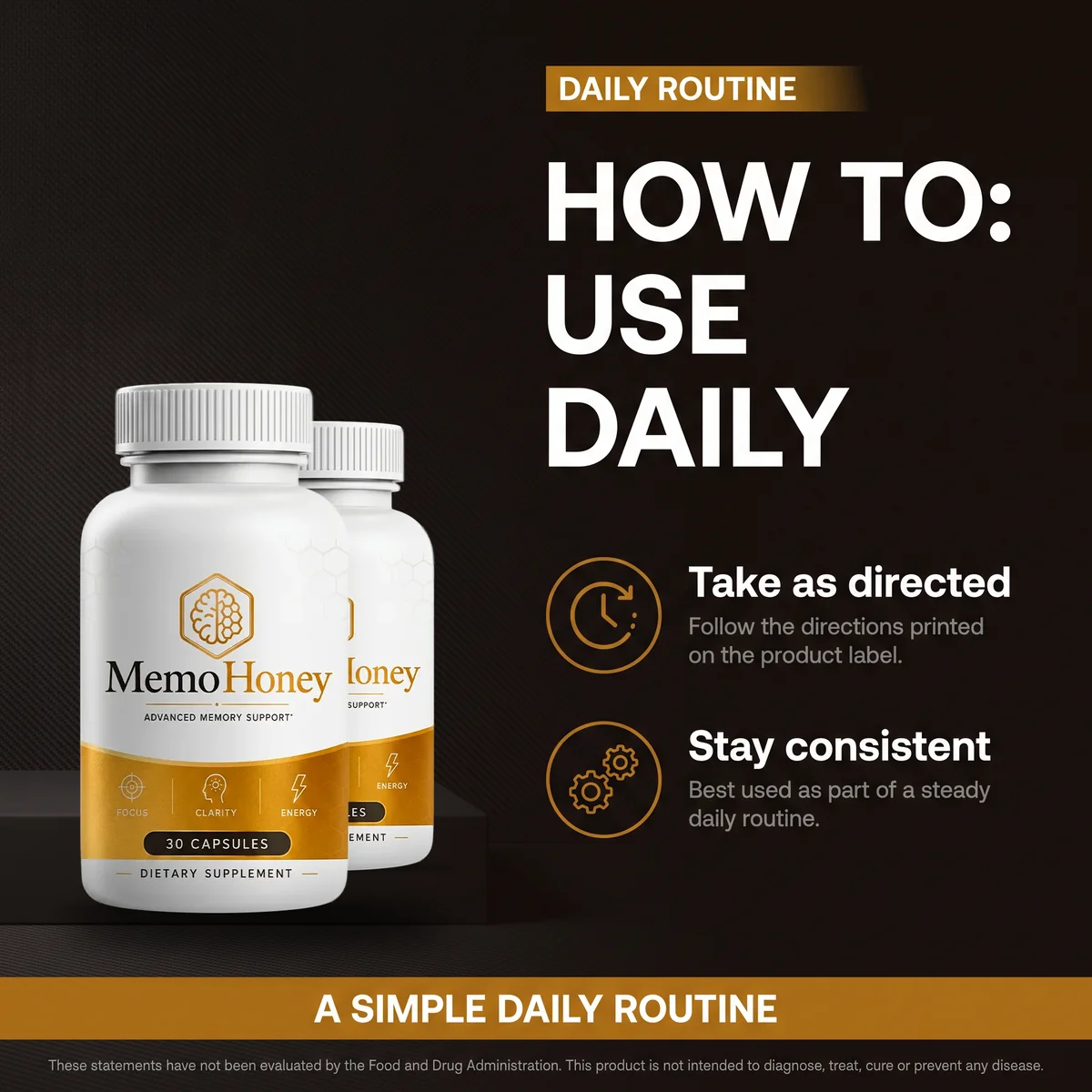
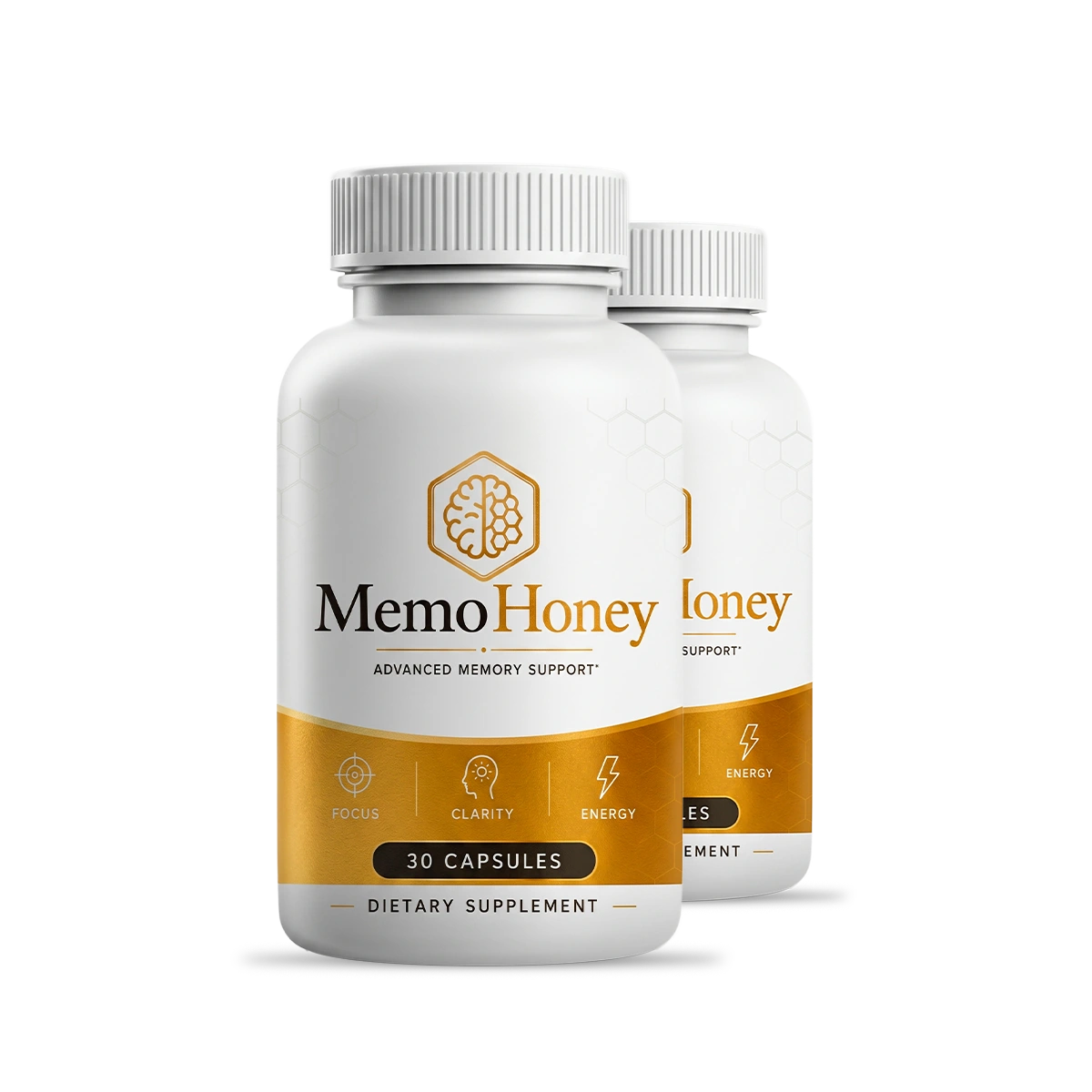
Choose A MemoHoney PackSwallowed whole, one a day, 30 to a bottle. Batch MEM-26/ME-8729, shipped from the United States.
Why a missing number matters here specifically
For the three amino acids in this formula, the absent amount is a disappointment. For niacin it is a practical problem, and the difference is worth spelling out.
Arginine, citrulline and beta-alanine have no established tolerable upper intake. A buyer who does not know how much is in a capsule cannot evaluate whether it is a useful amount, but there is no total they are supposed to stay under.
Niacin has a total. Thirty-five milligrams a day, across everything a person takes. Fortified breakfast cereal contains niacin. Most multivitamins contain niacin, frequently at or above the upper intake on their own. Energy drinks contain niacin, sometimes at surprising amounts. A person adding this capsule to two of those cannot do the arithmetic, because one of the terms is not printed.
| Common source | Typical niacin content | Can you add it up? |
|---|---|---|
| Fortified breakfast cereal | Printed on the nutrition panel | Yes |
| A multivitamin | Printed on the Supplement Facts panel | Yes |
| An energy drink | Printed on the nutrition panel | Yes |
| A capsule with no panel | Not printed anywhere | No |
Three of four sources in an ordinary day can be totalled. The fourth cannot.
The likely practical answer is reassuring. Any niacin figure that fits inside a capsule alongside five other named ingredients is probably well under 35 mg, and a buyer taking nothing else almost certainly has nothing to think about. The point is not that this capsule is dangerous. The point is that the one question a printed panel would answer in two seconds is the one question this label declines to answer.
What a good niacin label looks like
It is worth knowing what the alternative looks like, because niacin labelling is one of the few places where good practice is easy to recognise at a glance.
- A figure in milligrams, per serving. Not per capsule when the serving is two, and not per scoop when the scoop is unspecified.
- A percentage of the daily value beside it. This is what turns a number into something a reader can act on without looking anything up.
- The form named. Nicotinic acid flushes; nicotinamide, also called niacinamide, largely does not. They are different molecules with different behaviour, and a good label says which is in the bottle.
- A caution about the flush where the amount warrants one. Any product above the upper intake should warn, and many do.
The form distinction is the one most buyers have never heard of and the one that makes the most practical difference. Nicotinic acid is the form that triggers the flush and the form used in the lipid-lowering trials. Nicotinamide does not flush at ordinary amounts and is the form in most multivitamins. A label that prints only the word niacin has not told you which, and a buyer expecting a flush who gets none has learned nothing about how much they took.
This label prints neither the amount nor the form. That is not unusual for a capsule with no Supplement Facts panel, and it is the reason the flush, if it happens, is the only feedback available about either question.
What to do about it
- Read the panels on everything else you take. Fortified cereal, multivitamin, energy drink, pre-workout. Write down the niacin figures.
- Total them. If you are already near 35 mg before this capsule, the missing number matters to you specifically.
- Ask a pharmacist. Ten minutes with a list of what you take is the fastest way to settle it, and it is free.
- Watch for a flush in the first week. Harmless, and it is the only feedback this ingredient gives you about its own amount.
- Take it with food if the flush is uncomfortable. It reduces both the intensity and the speed of onset.
And if the absent figure is the thing that decides it for you, that is a legitimate reason not to buy this bottle. The 60-day window exists partly for readers who conclude that after ordering, and the scoring sheet on this site gives this product nothing at all on the panel question, in public.
Three ingredients here have no ceiling. One does, at 35 mg a day across everything, and its amount is the one the label does not print.
MemoHoney is a dietary supplement, not a treatment for anything. Memory that has changed suddenly, quickly, or in a way people close to you have noticed is a reason to make an appointment rather than to start a capsule. MedlinePlus sets out plainly what ordinary forgetfulness looks like and what does not belong in that category.
References
- Institute of Medicine (US) committee on Dietary Reference Intakes, 1998 — the niacin chapter of Dietary Reference Intakes for Thiamin, Riboflavin, Niacin, Vitamin B6, Folate, Vitamin B12, Pantothenic Acid, Biotin, and Choline (National Academies Press); it sets the adult tolerable upper intake for nicotinic acid from supplements at 35 mg a day (NCBI Bookshelf NBK114304)
- Morris MC and colleagues, J Neurol Neurosurg Psychiatry 2004;75(8):1093-9 — Dietary niacin and the risk of incident Alzheimer's disease and of cognitive decline; what it tested: an observational study of niacin from FOOD, not from capsules (PubMed 15258207)
- Qin B and colleagues, Am J Clin Nutr 2017;106(4):1032-1040 — Intake of niacin, folate, vitamin B-6, and vitamin B-12 through young adulthood and cognitive function in midlife: the Coronary Artery Risk Development in Young Adults (CARDIA) study (PubMed 28768650)
- Haynes R and colleagues, Clin Ther 2019;41(9):1767-1777 — Serious Adverse Effects of Extended-release Niacin/Laropiprant: Results From the Heart Protection Study 2-Treatment of HDL to Reduce the Incidence of Vascular Events (HPS2-THRIVE) Trial; what it tested: niacin-laropiprant at 2,000/40 mg a day in 25,673 patients (PubMed 31447131)
- Durham SH, Covington EW, Clemmons KJ, J Am Pharm Assoc (2003) 2018;58(5):564-567 — Hepatotoxicity upon using niacin to pass a drug test: A case report (PubMed 29941333)
- Gagne JJ and colleagues, Pharmacoepidemiol Drug Saf 2018;27(1):30-37 — Safety assessment of niacin in the US Food and Drug Administration's mini-sentinel system (PubMed 29108128)